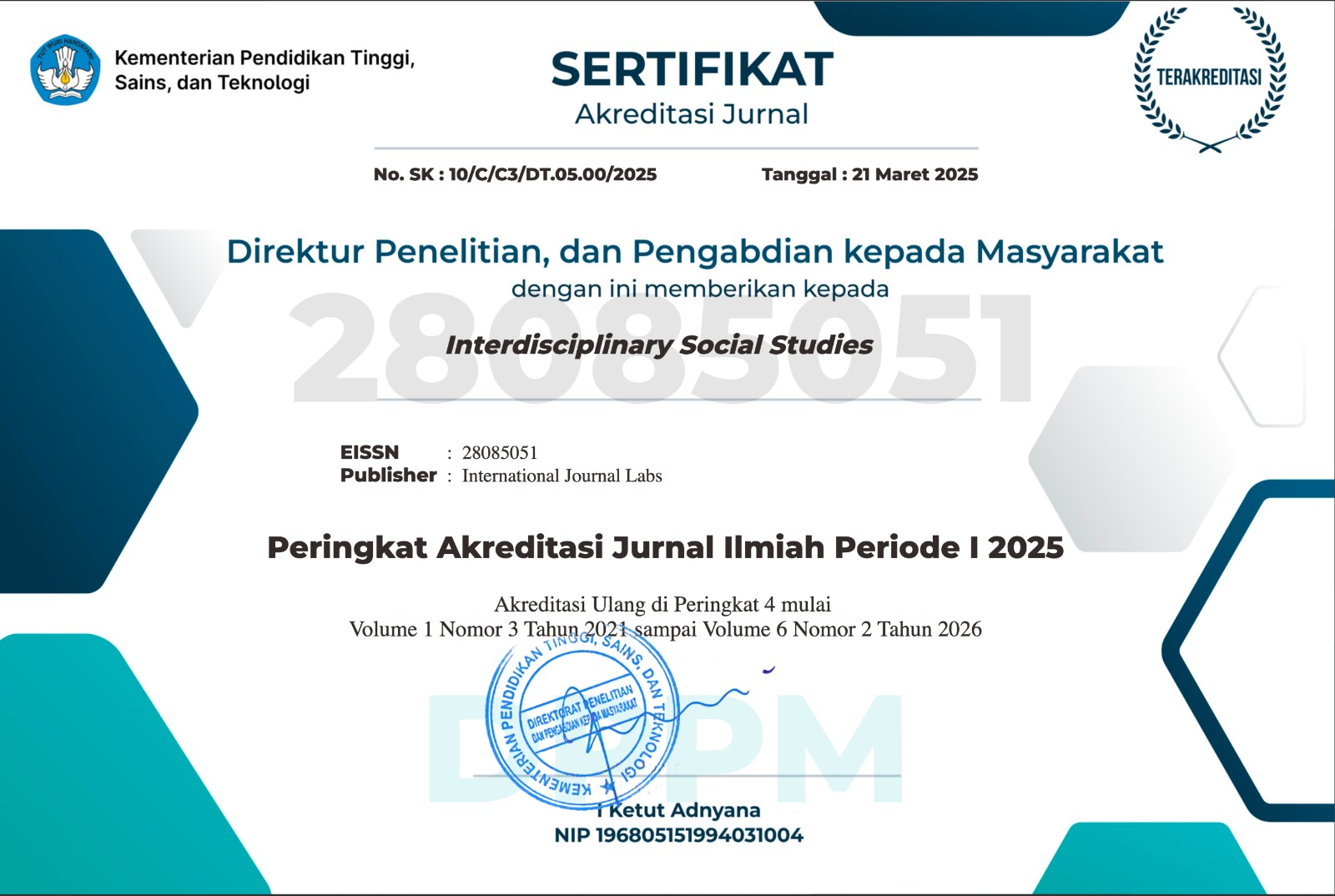
An Analysis on Social Media Disinformation
The rapid development of technology and information offers many conveniences, one of which is the efficiency of communication in the form of exchanging information. However, the rapid exchange of information was handled unwisely by some parties, including deliberately spreading false information called disinformation. This study aims to understand the phenomenon of disinformation that occurs in online media. This study uses qualitative research methods, while data collection techniques are carried out by exploring journals and other information relevant to the study. The results showed that the phenomenon of disinformation can be anticipated through institutional, technological and literacy approaches. Meanwhile, the cause of this disinformation phenomenon is caused by the abundance of incoming information and the lack of re-examination of the information received.
Ahmad, A. (2013). Perkembangan Media Online dan Fenomena Disinformasi (Analisis pada Sejumlah Situs Islam) Online Media Development and Phenomenon of Disinformation (Analysis of Islamic sites). 16(3), 177–186.
Benkler, Y. (2012). Sharing nicely: On shareable goods and the emergence of sharing as a modality of economic production. In The Social Media Reader.
Cross, M. (2012). Bloggerati, twitterati: how blogs and Twitter are transforming popular culture. Choice Reviews Online, 49(06). https://doi.org/10.5860/choice.49-3321
Erland, R., & Eka, C. (2020). Mengenal dan Mengantisipasi Hoax di Media Sosial pada Kalangan Pelajar. Jurnal Abdi MOESTOPO, 03(01), 9–12.
Fathurokhmah, F. (2002). KRISIS HOAX dan FAKE NEWS DALAM ERA KOMUNIKASI VIRTUAL DI MEDIA MASSA. 1–20.
Fuchs, C. (2014). Social Media: A Critical Introduction. In Social Media: A Critical Introduction. https://doi.org/10.4135/9781446270066
Jenkins, H. (2022). 6 Interactive Audiences? The “Collective Intelligence” of Media Fans. In Fans, Bloggers, and Gamers. https://doi.org/10.18574/nyu/9780814743690.003.0009
Juditha, C. (2018). Interaksi Komunikasi Hoax di Media Sosial serta Antisipasinya Hoax Communication Interactivity in Social Media and Anticipation. 3(1), 31–44.
Lister, M., Dovey, J., Giddings, S., Kelly, K., & Grant, I. (2006). New Media A Critical Introduction Second Edition. In Choice Reviews Online (Vol. 44, Issue 04).
Mahmoud, A. E. B., & Auter, P. J. (2009). The interactive nature of computer-mediated communication. American Communication Journal, 11(4).
MASTEL. (2017). Hasil survey MASTEL tentang wabah hoax nasional. Http://Mastel.Id/Infografis-Hasil-Survey-Mastel-Tentang-Wabah-Hoax-Nasional/.
Maulana, A., & Situngkir, H. (2012). Some Inquiries to Spontaneous Opinions: A Case with Twitter in Indonesia. SSRN Electronic Journal. https://doi.org/10.2139/ssrn.1702250
Mulyana, D. (2000). Pengantar Ilmu Komunikasi. Bandung?: Remaja.
Nasrullah, R. (2016). Media sosial: Perspektif komunikasi, budaya dan sosioteknologi. Simbiosa Rekatama.
Pratiwi, A., & Asyarotin, E. N. K. (2019). Implementasi literasi budaya dan kewargaan sebagai solusi disinformasi pada generasi millennial di Indonesia. Jurnal Kajian Informasi & Perpustakaan, 7(1). https://doi.org/10.24198/jkip.v7i1.20066
Rudi, A. (2017). Kenapa “hoax” mudah tersebar di Indonesia? Http://Megapolitan.Kompas.Com/Read/2017/02/08/21160841/Kenapa.Hoax.Mudah.Tersebar.Di.Indonesia.
Samosir, F. T., & Tjahjono, P. E. (2020). ANALISIS PENYEBARAN INFORMASI HOAX DIMEDIA SOSIAL DI KALANGAN MAHASISWA ( Studi Mahasiswa Di Fakultas FISIP Universitas Bengkulu ). BIBLIOTIKA?: Jurnal Kajian Perpustakaan Dan Informasi Volume, 4, 259–267.
Sasmito, A. (2018). Tool Kit Penanganan Hoaks dan Disinformasi.
Silverman, C. (2015). Lies, Damn Lies, and Viral Content. ?Tow Center for Digital Journalism.
Sugiyono. (2014). Metode Penelitian Pendidikan Pendekatan Kuantitatif,. Kualitatif, dan R&D. Bandung: Alfabeta.
Copyright (c) 2022 Minarni Adham

This work is licensed under a Creative Commons Attribution-ShareAlike 4.0 International License.
Authors who publish with this journal agree to the following terms:
- Authors retain copyright and grant the journal right of first publication with the work simultaneously licensed under a Creative Commons Attribution-ShareAlike 4.0 International. that allows others to share the work with an acknowledgement of the work's authorship and initial publication in this journal.
- Authors are able to enter into separate, additional contractual arrangements for the non-exclusive distribution of the journal's published version of the work (e.g., post it to an institutional repository or publish it in a book), with an acknowledgement of its initial publication in this journal.
- Authors are permitted and encouraged to post their work online (e.g., in institutional repositories or on their website) prior to and during the submission process, as it can lead to productive exchanges, as well as earlier and greater citation of published work.